



“Roof deck” actually means two different things, and it’s worth clearing that up before diving into ideas. Some people mean a rooftop deck, an entirely new outdoor living space built on top of a flat roof, garage, or addition. Others mean a covered deck, a standard ground-level or elevated deck with a roof structure built over it for shade and weather protection. Both are fantastic ways to expand your outdoor living space, so we’ll cover ideas, costs, and materials for each.
Key Takeaways
- A composite paver system over a rubber membrane is one of the most popular rooftop deck builds right now, since it distributes weight evenly and requires almost no maintenance.
- A simple gable roof extension over an existing deck typically runs $60 to $155 per square foot installed, while a basic pergola addition runs closer to $20 to $40 per square foot.
- Full rooftop deck projects typically cost between $10,000 and $36,000 for a standard 300-square-foot space, with $30 to $85 per square foot being the most common range.
- Composite and PVC decking are generally the best options for rooftop applications, since they resist moisture, don’t warp, and pair well with waterproof membrane systems.
- A retractable awning or louvered pergola is one of the easiest ways to add “roof” coverage to an existing deck without a full structural rebuild.
Rooftop Deck Ideas Worth Considering
If you’re building on top of a flat roof, garage, or home addition, you’re essentially creating a brand-new outdoor room, and that opens up some genuinely fun design directions.
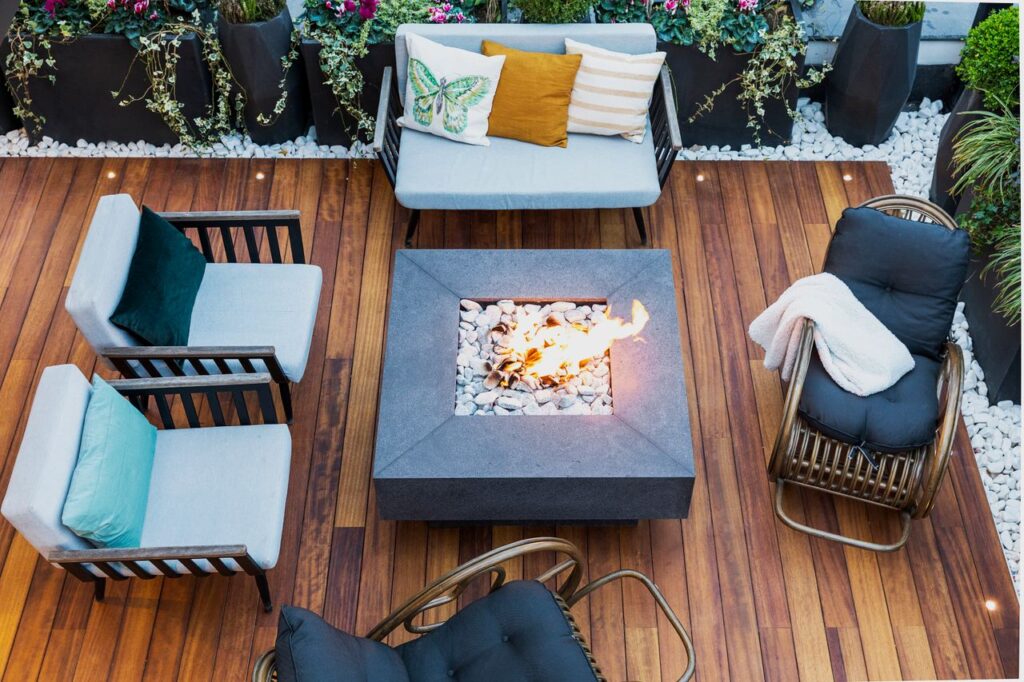
A composite paver deck with built-in planters. Interlocking composite tiles set over a proper waterproof membrane create a clean, low-maintenance surface that handles foot traffic and weather beautifully. Adding raised planters along the perimeter softens the space and adds privacy without blocking your view.
A louvered pergola for adjustable shade. Rooftop spaces get more sun exposure than a typical backyard deck, so a louvered pergola that opens and closes gives you control over shade throughout the day, rather than committing to full coverage or none at all.
A sunken lounge zone. If your rooftop deck has the structural capacity, a slightly recessed seating area with built-in bench seating creates a cozy, wind-protected spot to relax, especially valuable on rooftop spaces that can get breezy.
A dedicated bar or beverage station. Rooftop decks are entertaining spaces almost by default, given the views. A small built-in bar with under-counter storage makes hosting up there far more functional than carrying drinks up a flight of stairs all evening.
Covered Deck Roof Ideas: Simple and Doable
If you already have a deck and just want a roof over it, there are options at nearly every budget:
A shed-style or gable roof extension. This is the most permanent option, tying directly into your home’s existing roofline for full weather protection. It’s also the most involved structurally, so it’s worth planning around your home’s architecture rather than treating it as an afterthought.
A wood or aluminum pergola. A classic pergola offers filtered shade and a defined outdoor “room” feel without the full commitment of a solid roof. Aluminum pergolas in particular have become popular for their durability and lower maintenance compared to wood.
A retractable awning. For homeowners who want flexibility without a big structural project, a retractable awning is one of the simplest ways to add coverage. Many motorized versions now include wind and rain sensors, so they retract automatically when weather rolls in.
A shade sail. This is about as simple as roof deck ideas get: taut fabric stretched between anchor points, offering seasonal shade at a fraction of the cost of a solid structure. It’s a great option if you want coverage over just a portion of your deck rather than the whole thing.
If you’re weighing a pergola against something more enclosed, it’s worth reading through how a pergola actually compares to a gazebo before deciding which structure fits your space and goals.
Are Rooftop Decks Worth It?
For a lot of homeowners, yes, especially in urban or suburban settings where a rooftop deck unlocks outdoor living space that simply doesn’t exist otherwise. Beyond the lifestyle benefit, a well-built rooftop deck can add meaningful home value, particularly in areas where ground-level yard space is limited.
That said, “worth it” depends on getting the structural and waterproofing side right. A rooftop deck isn’t just a surface, it’s a system that has to manage water runoff, load distribution, and long-term weatherproofing for the roof underneath it. Skimping on that foundation to save money upfront is the single biggest mistake we see, since a poorly waterproofed rooftop deck can lead to costly leaks and roof damage down the line. When it’s built correctly, though, it’s genuinely one of the highest-impact additions you can make to a home with limited outdoor space.
How Much Does a Roof Deck Typically Cost?
Costs vary quite a bit depending on which type of “roof deck” you’re building:
For a full rooftop deck, expect to pay somewhere between $10,000 and $36,000 for a standard 300-square-foot space, or roughly $30 to $85 per square foot. That range accounts for decking material, structural support, waterproofing membrane, railings, and access stairs. Larger or more elaborate builds with premium materials and complex waterproofing can push past $40,000.
For adding a roof to an existing deck, a simple pergola addition typically runs $20 to $40 per square foot, while a full gable roof extension tied into your home runs significantly higher, often $60 to $155 per square foot, since it involves more structural framing and roofing work. Retractable awnings and shade sails are the most budget-friendly options, often costing just a few hundred to a few thousand dollars depending on size and whether you go motorized. If budget is your main concern, it’s worth looking at ways to build a deck without blowing your budget before settling on a roof structure.
What Is the Best Option for Roof Decking?
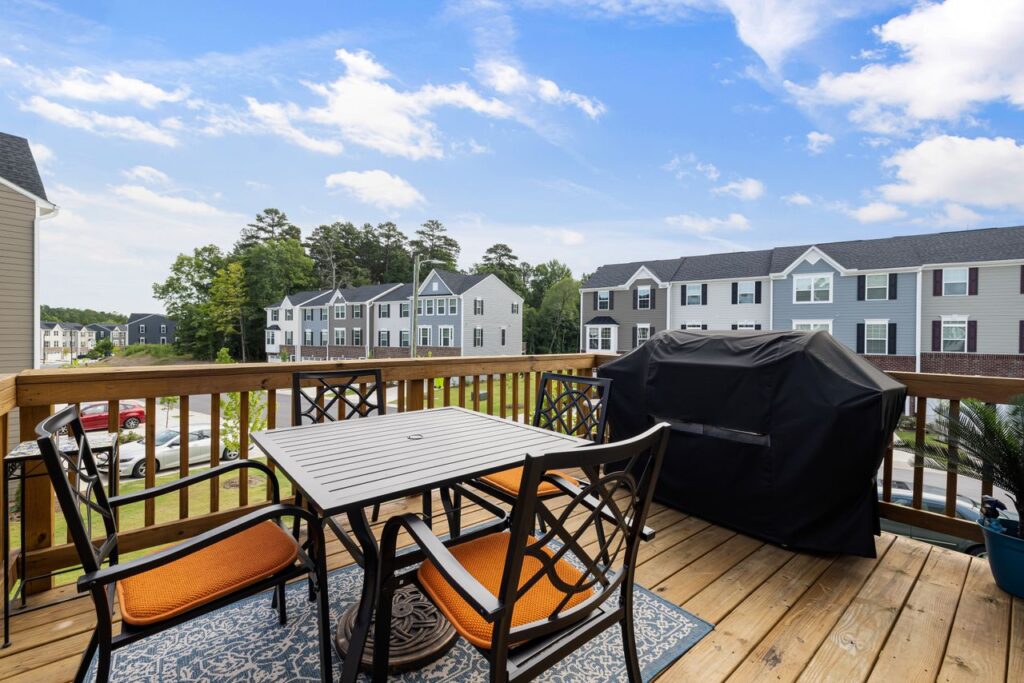
For rooftop deck applications specifically, composite and PVC decking are generally the best choices. Both resist moisture and won’t warp, rot, or splinter the way natural wood can, which matters a lot on a rooftop where the decking sits directly over a waterproofing membrane and needs to hold up to more direct sun and weather exposure than a typical backyard deck. Composite pavers set on adjustable pedestals are also a popular choice, since they allow for proper drainage underneath while creating an even, walkable surface.
If you’re drawn to a natural wood look, exotic hardwoods like ipe are a beautiful option and hold up remarkably well outdoors, though they come at a higher price point and require more maintenance than composite. For a standard covered deck at ground level, the material decision opens up more, and it’s worth thinking through what’s trending for 2026 if style is a priority alongside function; our rundown of current deck design trends covers what’s popular in materials and layouts right now.
Whichever direction you go, one thing that’s true across both rooftop and covered decks: don’t skip proper lighting design once the structure is in place. It’s often the detail that makes the space feel finished, and there’s a lot to weigh when comparing lighting options for your deck.
If you’re ready to see what’s possible for your space, whether that’s a full rooftop build or simply adding coverage to your current deck, take a look through our project gallery for inspiration, or reach out and we’ll help you figure out the right approach for your home.
FAQ
Are rooftop decks worth it?
For most homeowners, yes, especially where ground-level outdoor space is limited. The key is proper structural planning and waterproofing; a well-built rooftop deck can add real living space and home value, while a poorly built one risks leaks and roof damage.
What are some simple deck ideas with a roof?
A wood or aluminum pergola, a retractable awning, and a shade sail are all straightforward, lower-cost ways to add coverage to an existing deck without a full structural roof extension.
How much does a roof deck typically cost?
A full rooftop deck typically costs $10,000 to $36,000 for a standard 300-square-foot space, or $30 to $85 per square foot. Adding a roof to an existing deck ranges from a few hundred dollars for a shade sail up to $60 to $155 per square foot for a full gable roof extension.
What is the best option for roof decking?
Composite and PVC decking are generally the best choices for rooftop decks, since they resist moisture, won’t warp, and pair well with waterproofing membrane systems. Exotic hardwoods like ipe are a higher-maintenance but beautiful natural wood alternative.
Do rooftop decks require special permits?
Yes, in most cases. Rooftop decks typically require building and zoning permits, and sometimes structural engineering approval, due to the load-bearing and waterproofing considerations involved.